The role of a district attorney is pivotal in the criminal justice system. District attorneys are state and local prosecutors; federal criminal cases are handled by United States Attorneys. Their responsibilities encompass investigating and prosecuting criminal offenses, making charging decisions, participating in pretrial and trial proceedings, and managing post-conviction and appeals processes.
Their participation typically begins after law enforcement has conducted an initial investigation and refers the matter for review. At that point, the district attorney evaluates whether probable cause supports filing criminal charges and whether the evidence is sufficient to proceed.
A prosecutor may initiate charges upon a showing of probable cause; judicial review of probable cause is constitutionally required for significant restraints on liberty (Gerstein v. Pugh, 420 U.S. 103, 111–12 (1975)). Additionally, district attorneys engage in community outreach to prevent crime and enhance public safety.
As elected officials, many district attorneys function as chief law enforcement officers within their counties, though this varies by state. They collaborate closely with law enforcement agencies, victim advocates, and other stakeholders to uphold the law and safeguard individual rights.
The question of when does a district attorney get involved often arises when the public seeks clarity on how the criminal justice process works, especially concerning serious offenses or high-profile cases. In many jurisdictions, prosecutors also advise investigators pre‑arrest, including on warrant applications and charging options, and may issue requests for further investigation before accepting or declining a referral.
The position requires command of criminal law, courtroom procedure, and prosecutors’ ethical duties. Effective office leadership and communication help ensure consistent, lawful charging and litigation practices across cases.
Key Takeaways
- Prosecutes criminal cases for the state or local government.
- Directs investigations and makes charging decisions.
- Manages pretrial strategy and motion practice.
- Tries cases to verdict; proves guilt beyond a reasonable doubt.
- Coordinates select post‑conviction matters and appellate interface.
Criminal Investigations and Prosecutions
The Investigation Process
District attorneys work closely with law enforcement agencies to gather evidence, interview witnesses, and build cases against individuals accused of committing crimes. They review the evidence presented by law enforcement to determine whether there is sufficient legal basis to file criminal charges.
For digital content, investigators often consult prosecutors on warrant scope to satisfy Riley v. California, 573 U.S. 373 (2014). Screening can occur pre‑arrest or post‑arrest and often includes consultation on investigative steps, search warrants, and witness interviews to establish probable cause and preserve admissible evidence.
Prosecution and Grand Juries
Prosecutors present matters to court‑impaneled grand juries and may seek impanelment where authorized by law (U.S. Const. amend. V; Fed. R. Crim. P. 6).
Seeking Justice and Accountability
District attorneys work to seek justice for victims and hold offenders accountable, while exercising prosecutorial discretion consistent with constitutional limits (Wayte v. United States, 470 U.S. 598, 607–08 (1985)).
They also negotiate plea agreements, a long‑recognized component of the justice system; prosecutors may assess charges and concessions within lawful bounds (Bordenkircher v. Hayes, 434 U.S. 357, 363–65 (1978)).

Decision-Making in Charging Offenses
District attorneys are responsible for making critical decisions about charging offenses and pursuing criminal cases. Understanding when does a district attorney get involved in charging decisions turns on probable cause and evidentiary sufficiency.
They assess the strength of proof, offense severity, and victim impact—balancing law, facts, and fairness—in deciding whether to file charges. They also weigh legal and ethical standards. When evidence is insufficient or prosecution is not in the interest of justice, they may decline to file.
Where appropriate, they may pursue diversion or pretrial intervention. They may also seek statutory enhancements in limited circumstances when supported by law and proof. For example, if officers detain a suspect based on witness IDs but the most probative evidence is on a cellphone, prosecutors may decline immediate filing and request additional investigation.
After a warrant compliant with Riley v. California, 573 U.S. 373 (2014), confirms location data and messages establishing identity and intent, the office can file charges post‑arrest with a firmer probable‑cause showing and cleaner evidentiary posture.
Role in Pretrial Proceedings
| Role | Description |
| Defense Attorney | Represents the defendant and advocates for their rights and interests during pretrial proceedings. |
| Prosecutor | Presents the case against the defendant and seeks to prove their guilt during pretrial proceedings. |
| Judge | Oversees pretrial proceedings, makes decisions on legal issues, and ensures fair treatment of all parties involved. |
| Defendant | Individuals or entities accused of committing a crime participate in pretrial proceedings through their legal representation. |
| Witness | Provides testimony or evidence relevant to the case during pretrial proceedings. |
District attorneys play a crucial role in pretrial proceedings, which encompass all legal activities that occur before a criminal case goes to trial. Roles and burdens vary by jurisdiction and motion type; the prosecution bears the burden of proof at trial.
During this phase, district attorneys work with defense attorneys, judges, and other stakeholders to prepare for trial and resolve legal issues that may arise. They engage in plea negotiations with defense attorneys to resolve cases without going to trial, taking into account the strength of the evidence and the interests of victims.
Discovery obligations are continuing and governed by statute or rule, and courts may impose remedies for noncompliance; deadlines and sanctions vary by jurisdiction. District attorneys also participate in pretrial hearings to address legal motions filed by defense attorneys, such as motions to suppress evidence or dismiss charges.
Once a defendant makes a prima facie showing, the prosecution generally bears the burden to justify the search or seizure or to show admissibility under an exception (see, e.g., Coolidge v. New Hampshire, 403 U.S. 443, 455 (1971)).
They must disclose exculpatory (tending to negate guilt or mitigate punishment) and impeachment evidence (bearing on witness credibility) to the defense (Brady v. Maryland, 373 U.S. 83 (1963); Giglio v. United States, 405 U.S. 150 (1972)).
Additionally, district attorneys work with law enforcement agencies to ensure that witnesses are available to testify at trial and that evidence is properly preserved for presentation in court. Consider a suppression motion arising from a vehicle stop where officers smelled contraband, obtained limited consent, and then opened a closed backpack.
If the defendant shows a factual basis that the search exceeded consent, the prosecutor must establish a valid exception (such as automobile or plain‑smell doctrines) or independent probable cause; otherwise, the evidence is excluded and the charging posture may narrow.
Role in Trial Proceedings
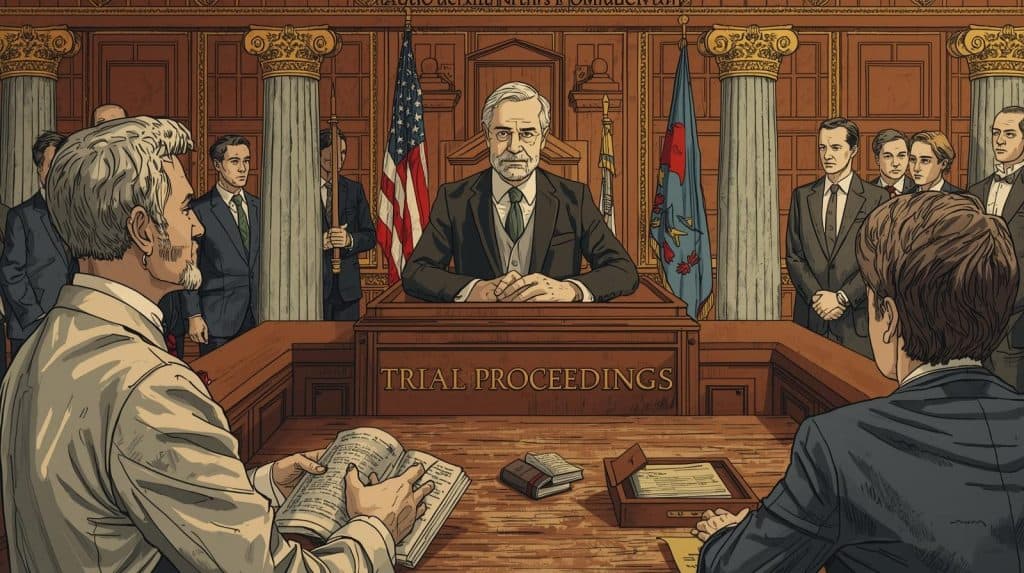
District attorneys play a central role in trial proceedings, where they present evidence, examine witnesses, and make legal arguments to prove guilt beyond a reasonable doubt. District attorneys address the jury through opening statements, presentation of evidence, and closing argument.
During trial proceedings, district attorneys must adhere to legal standards and ethical responsibilities to ensure that defendants receive a fair trial. The prosecutor is a minister of justice whose duty is not to win a case, but to see that justice is done (Berger v. United States, 295 U.S. 78, 88 (1935)). District attorneys make appropriate motions and responses to address legal issues that arise during trial and ensure that the rights of defendants are upheld.
Post-Conviction and Appeals
Enhanced Sentencing and Victim Support
After a conviction, district attorneys may seek or notice statutory sentence enhancements where applicable. Many states authorize recidivist enhancements under habitual offender statutes (e.g., Cal. Penal Code § 667(b)–(i)). Courts retain discretion to impose lawful sentences consistent with statutory factors.
They also collaborate with victim advocates to ensure that victims receive support throughout the post-conviction process and have an opportunity to provide input on sentencing decisions. Federal law affords victims rights at sentencing, including the right to be reasonably heard (Crime Victims’ Rights Act, 18 U.S.C. § 3771). Comparable state constitutional or statutory provisions may apply.
Handling Appeals
In many jurisdictions, appeals are handled by a state Attorney General or specialized prosecutorial appellate units; some district attorney offices brief and argue appeals or consult on appellate strategy. For example, several states assign criminal appellate representation to the Attorney General by statute.
In Virginia, the Attorney General represents the Commonwealth in criminal cases on appeal. See Va. Code § 2.2-511. They present legal arguments and evidence to support the validity of the conviction and advocate for upholding the decision of the trial court.
Upholding the Integrity of the Criminal Justice System
District attorneys file briefs, present oral argument when appropriate, and comply with appellate orders and remands to ensure lawful resolution of appellate issues.
Community Engagement and Prevention Initiatives
District attorneys partner with community groups, schools, and law enforcement to address drivers of crime—such as substance abuse and mental health—through education and outreach.
Where authorized by statute or court rule, offices operate diversion, problem‑solving, and reentry initiatives to reduce recidivism (e.g., Cal. Penal Code § 1000). These programs complement prosecution by steering appropriate cases toward treatment, supervision, or restitution while preserving accountability.
FAQs
What is the role of a district attorney?
The district attorney is a public official who represents the government in the prosecution of criminal offenses. They are responsible for reviewing evidence, deciding whether to file charges, and prosecuting cases in court.
When does a district attorney get involved?
A district attorney may get involved before or after an arrest. Law enforcement often refers a case for prosecutorial screening; prosecutors may advise on warrants and investigative steps, then decide whether to file charges when probable cause exists. Procedures and timing vary by state and office policy.
What factors does a district attorney consider when deciding to prosecute a case?
District attorneys consider various factors when deciding whether to prosecute a case, including the strength of the evidence, the severity of the crime, the defendant’s criminal history, and the interests of the victim and the community.
Can a district attorney drop charges against a defendant?
Yes, a district attorney has the discretion to drop charges against a defendant if new evidence comes to light, if the evidence is insufficient to prove guilt beyond a reasonable doubt, or if it is in the interest of justice to do so.
What is the difference between a district attorney and a prosecutor?
The terms “district attorney” and “prosecutor” are often used interchangeably, but there is a subtle difference. A district attorney is an elected official who represents a specific jurisdiction, while a prosecutor is a lawyer who represents the government in criminal cases.
This article is general information, not legal advice. Local rules govern.