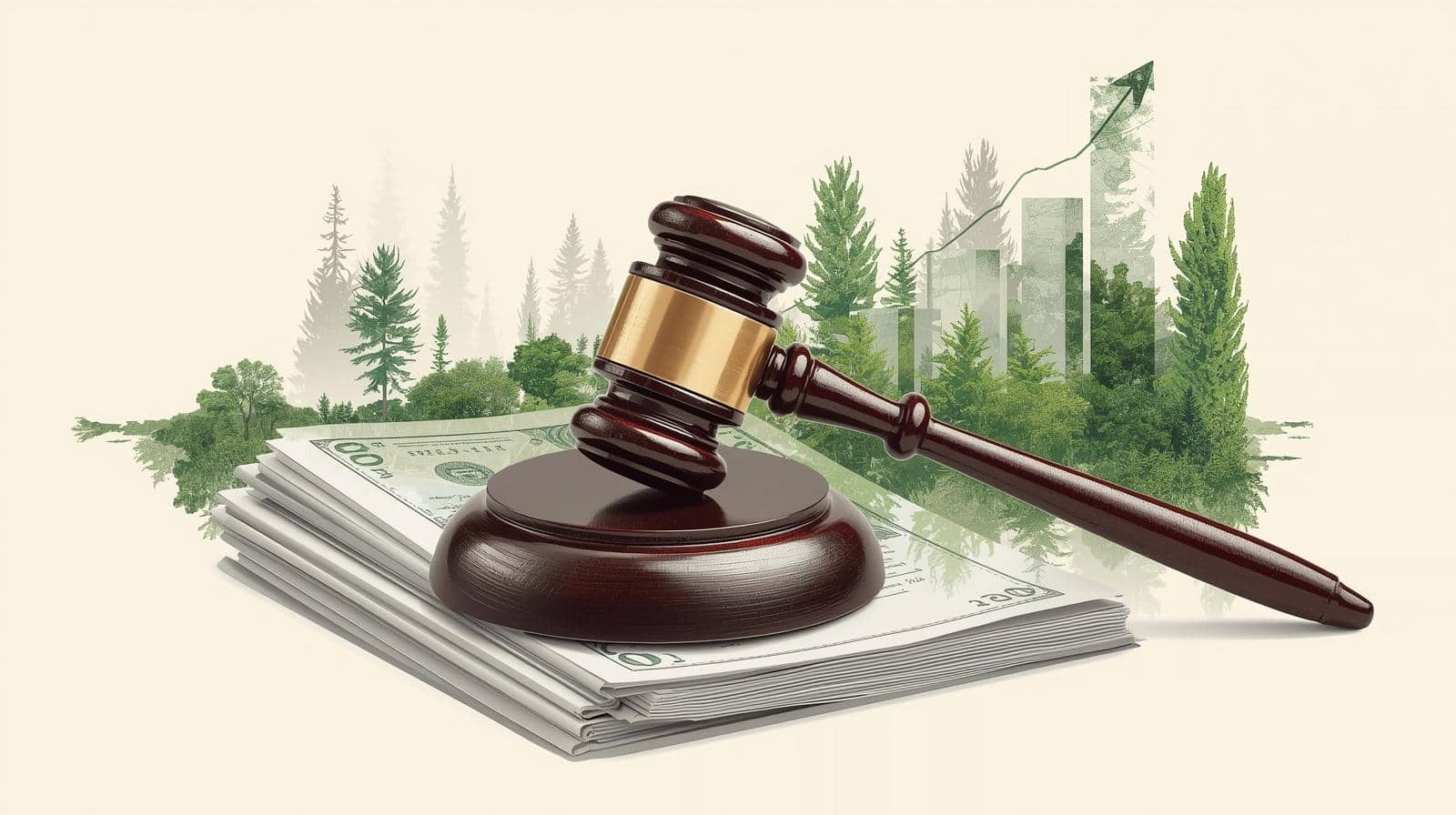
The earnings of an environmental lawyer in the United States are influenced by several determinants, including employer type, experience, and practice niche. This article examines how compensation shifts across settings and roles. For clarity, this discussion uses the exact phrase environmental lawyer salary to describe compensation across employers, experience levels, and practice areas.
Overview of Environmental Lawyer Salary in the US
The demand for environmental lawyers stems from a growing awareness of ecological issues and an increasingly complex regulatory framework. Businesses, governmental bodies, and non-profit organizations all require legal counsel to navigate environmental compliance, litigation, and policy.
This demand, paired with the specialized knowledge and skills required, supports competitive compensation. Environmental law changes with new statutes, regulations, and scientific developments. Compensation trends adjust as the regulatory landscape shifts.
The Role of an Environmental Lawyer
Environmental lawyers provide counseling, advocacy, and policy work across the public and private sectors. They interpret and apply federal, state, and local environmental laws. Key frameworks include the Clean Air Act (42 U.S.C. § 7401 et seq.), Clean Water Act (33 U.S.C. § 1251 et seq.), National Environmental Policy Act (42 U.S.C. § 4321 et seq.), Resource Conservation and Recovery Act (42 U.S.C. § 6901 et seq.), and CERCLA/Superfund (42 U.S.C. § 9601 et seq.).
Their work can involve advising clients on regulatory compliance and conducting environmental impact assessments. They also represent parties in administrative hearings and court proceedings, negotiate settlements, and draft environmental legislation. This multifaceted engagement means their expertise is highly valued across various sectors.
Market Demand and Specialization
The market for environmental lawyers is driven by a number of factors. Increased public concern over climate change, pollution, and natural resource depletion has led to more stringent environmental regulations and, consequently, a greater need for legal professionals who understand these complexities.
Furthermore, renewable energy development, hazardous waste management, and the remediation of contaminated sites create ongoing legal work under permitting and enforcement regimes. The more specialized a lawyer’s knowledge within environmental law, the more they can command in the market, as niche expertise is often in short supply.

Factors Affecting environmental lawyer salary
An environmental lawyer’s salary is affected by several key factors. These factors interact to determine overall earning potential. Understanding these variables is crucial for anyone considering a career in environmental law or for those looking to advance within the field.
Geographic Location
The economic landscape of the United States is not uniform, and neither are legal salaries. Metropolitan areas with a high concentration of businesses, industries, and governmental agencies that frequently interact with environmental regulations tend to offer higher compensation.
Cities like Washington, D.C., New York, Los Angeles, and San Francisco often present more lucrative opportunities due to the higher cost of living and the greater volume of complex environmental legal matters. Conversely, positions in smaller cities or rural areas may offer lower salaries, though the cost of living might also be lower.
Employers often benchmark compensation to local market rates and cost-of-living differences. Federal pay systems such as the OPM General Schedule apply locality adjustments. (OPM, General Schedule Pay Tables, 2025).
Size and Type of Employer
The entity that employs an environmental lawyer plays a significant role in their pay. Large, multinational corporations, for instance, often have substantial budgets for their legal departments, including environmental compliance, and may offer competitive salaries and benefits.
Major law firms, particularly those with dedicated environmental practices, also tend to compensate their associates and partners well, commensurate with billable hours and the firm’s success.
Government agencies, while providing stability and a public service focus, may offer salaries that are generally lower than those in the private sector, though they can still be respectable, especially with experience and for specialized roles.
Non-profit organizations, often driven by mission rather than profit, typically offer the lowest salary ranges, though they provide invaluable experience and the opportunity to contribute directly to environmental causes.
Economic Conditions and Industry Trends
The broader economic climate and specific industry trends can also influence environmental lawyer salaries. During expansions, permitting and transactional work often increase. In downturns, enforcement and litigation may dominate.
Recent shifts in judicial review of agency interpretations, including the Supreme Court’s decision in Loper Bright Enterprises v. Raimondo, may affect regulatory certainty and demand for counsel. The Court overruled Chevron deference and directed courts to exercise independent judgment in interpreting statutes, which can alter compliance and litigation strategies. (Loper Bright Enterprises v. Raimondo, 603 U.S. 369 (2024).)

Pay Discrepancies by Employer for Environmental Lawyers
Employer type has a significant effect on an environmental lawyer’s earning potential. Compensation packages vary widely by an organization’s financial capacity, business model, and priorities, often producing substantial income differences.
Private Law Firms
Within private law firms, compensation for environmental lawyers often follows a tiered structure. Large-firm environmental lawyer salary scales typically track class year, with market adjustments during hiring cycles. Junior associates, fresh out of law school, typically earn a base salary that increases with each year of experience.
The larger and more prestigious the firm, the higher these starting salaries tend to be. Partners in these firms, who have a stake in the firm’s profitability, can earn significantly more. Compensation is tied to their client base, business development, and the firm’s overall success. Most law firms use billable-hour and realization metrics.
Meeting or exceeding targets directly affects bonuses and progression. The ceiling for compensation in top-tier firms is considerably high, reflecting the demands and rewards of corporate legal practice.
Corporate Legal Departments
Environmental lawyers employed directly by corporations, either as in-house counsel or as part of a larger legal team, often receive a salary that is competitive with private practice. This is especially true in larger companies. These roles may offer a more predictable workday and a greater focus on the company’s specific business needs. This contrasts with the broader range of clients seen in private practice.
Benefits packages in corporate settings can also be very attractive. They may include health insurance, retirement plans, and stock options, which contribute to overall compensation. In-house environmental lawyer salary benchmarks often reflect industry risk profiles and facility footprints. Compensation may also include short‑ and long‑term incentive plans tied to operational metrics.
Government Agencies
Working for government agencies, such as the Environmental Protection Agency (EPA) or state environmental departments, typically means a more structured salary scale. These positions often offer a defined pay grade based on experience and level of responsibility.
While the headline salary figures may not reach the heights seen in top private firms, government roles often provide excellent benefits, job security, and a pension plan. These features can make the overall financial picture more robust over a career.
The satisfaction of public service is a significant non-monetary benefit, but the financial compensation is still a key consideration. The salary here is often a reflection of public funding and civil service structures, creating a different set of benchmarks. Many attorney roles follow the GS pay scale with grade and step progression.
Non-Profit Organizations and Public Interest Groups
Environmental lawyers working for non-profit organizations and public interest groups generally earn the lowest salaries. Their pay is lower than that of counterparts in private firms, corporations, or government.
This is due to the funding models of these organizations, which are often reliant on grants, donations, and restricted funds. However, these roles offer the distinct advantage of direct engagement with environmental advocacy and policy development.
The experience can be professionally rewarding and build subject-matter credibility. For individuals passionate about environmental conservation and social justice, the intrinsic rewards of these positions can sometimes outweigh the financial considerations, though competitive salaries are still a factor in attracting and retaining talent.

Impact of Experience on Environmental Lawyer Salary
The journey from a newly qualified lawyer to a seasoned practitioner is marked by a growing accumulation of knowledge, skills, and a proven track record. Experience remains a primary driver of environmental lawyer salary across sectors.
Advancement typically increases billing rates in private practice or GS grades and steps in government roles. The longer a lawyer has navigated the complexities of environmental regulations and litigation, the more valuable their counsel becomes.
Entry-Level Salaries
At the beginning of their careers, environmental lawyers typically command entry-level salaries. Entry-level environmental lawyer salary varies by geography, employer type, and practice mix. These figures are guided by the market rates for new associates in law firms, starting salaries in government agencies, or entry positions in corporate legal departments.
While often modest, these salaries provide a foundation upon which to build. The focus at this stage is on learning, gaining practical experience, and demonstrating competence. The salary here is the initial investment the employer makes in a future asset.
Mid-Career Earnings
As environmental lawyers gain experience—typically after two to five years—their salaries begin to ascend. They move from junior associate to associate positions, often taking on more responsibility in cases and client management. Their ability to handle complex legal tasks and develop successful strategies becomes increasingly evident.
They also contribute measurably to the firm’s or organization’s success. Mid-career professionals often supervise junior lawyers and manage specific practice areas within a department. Many also lead key client relationships. This period usually sees a significant jump in compensation, reflecting their growing expertise and value.
Senior and Partner-Level Compensation
The apex of earning potential for many environmental lawyers is reached at the senior and partner levels. Senior associates who demonstrate exceptional skill and leadership may see substantial salary increases. For those in private practice, becoming a partner in a law firm opens the door to profit-sharing and ownership.
This structure can lead to significantly higher incomes, sometimes many times that of junior associates. In corporate settings, senior environmental counsel or general counsel roles come with commensurate compensation. In government, senior positions involve higher leadership responsibilities and, consequently, increased pay.
The compensation at this level rewards years of dedicated practice, a deep understanding of the law, and consistent results for clients and organizations. At this stage, compensation reflects sustained performance, client development, and leadership responsibilities.
Recent national partner surveys report average total compensation of about $1.4 million in 2024, based on responses from more than 1,700 Am Law 200 partners. (Major, Lindsey & Africa, 2024 Partner Compensation Survey.)

Environmental Lawyer Salary Variances by Practice Area
The field of environmental law comprises specialized domains, each with distinct legal challenges and market demands. The compensation for an environmental lawyer depends on the specific niche. Some areas are litigation‑intensive while others emphasize compliance or transactions, and these differences translate into distinct salary expectations.
Regulatory Compliance and Permitting
Lawyers specializing in regulatory compliance and permitting work closely with businesses to ensure they meet environmental standards. They also obtain the licenses and approvals required for operations. This area often involves navigating complex agency rules and procedures.
The demand for these services is consistent, as industries require ongoing compliance. Salaries in this area are generally solid because expertise in managing operational risks and ensuring legal adherence supports ongoing operations across industries.
Environmental Litigation and Dispute Resolution
Environmental litigation, which involves representing clients in court or administrative proceedings related to environmental matters, can be highly demanding and lucrative. Toxic torts, Superfund cost‑recovery, and major statutory violations generate significant fees and exposure. Successful advocates—especially at major firms—command higher rates and compensation.
Natural Resources and Land Use Law
This area of practice focuses on the management and utilization of natural resources, including water rights, mineral extraction, forestry, and land use planning. Lawyers in this field often work on issues related to environmental impact assessments for development projects, negotiations over resource access, and disputes over land ownership and usage.
The demand can fluctuate depending on economic development and resource extraction activities. Salaries can be competitive, especially for those with expertise in specialized resource management or complex land use negotiations.
Climate Change Law and Renewable Energy
As climate change becomes a more pressing global concern, the practice area of climate change law and renewable energy has seen significant growth. Lawyers in this field advise on carbon emissions regulations, renewable energy project development (e.g., wind farms, solar installations), and climate-related litigation. This is a rapidly evolving area with increasing demand for specialized expertise. Rapid growth and the need for specialized counsel have driven robust compensation in this field.
Transactional Environmental Law
Transactional environmental lawyers focus on the environmental aspects of business transactions, such as mergers, acquisitions, and real estate deals. They conduct due diligence to identify potential environmental liabilities and advise clients on risk mitigation strategies.
This area requires a strong understanding of both corporate law and environmental regulations. Compensation is often tied to the size and complexity of the transactions they handle, and can be quite substantial in major corporate transactions.

Average Environmental Lawyer Salary in the US
Pinpointing an exact “average” environmental lawyer salary across the entire US is challenging because national figures mask variation in employer pay bands and locality adjustments. Numerous variables, as previously detailed, create a broad spectrum of earnings.
For example, national associate salary medians in large firms reached $200,000 as of 2023 (NALP, 2023 Associate Salary Survey (published 2024)), while government attorney pay typically follows GS bands with locality adjustments (OPM, General Schedule Pay Tables, 2025). Industry surveys and government pay tables provide additional context for the financial landscape.
Salary Ranges by Experience Level
Generally, entry-level environmental lawyers in the US might expect to earn somewhere in the range of $70,000 to $100,000 annually (NALP, 2023 Associate Salary Survey (published 2024); OPM, General Schedule Pay Tables, 2025).
As they gain experience, moving into mid-career positions, this figure can increase to between $100,000 and $170,000. Senior environmental lawyers and partners in established firms, particularly in high-cost urban areas and specialized practice areas, can see annual earnings exceed $200,000. Top earners may exceed $300,000.
These figures represent broad averages and can be significantly higher or lower depending on the specific employer, location, and individual performance. Government starting salaries often correspond to GS‑11 or GS‑12, adjusted by locality, while large-law compensation follows firmwide scales and class-year bands. Exact figures vary by market and year.
Regional Salary Differences
As mentioned, geographic location significantly impacts salary. Regional cost structures influence environmental lawyer salary through market rates and locality pay. Environmental lawyers in major metropolitan hubs like New York City, San Francisco, or Washington, D.C. generally earn more.
Salaries in smaller cities or rural regions tend to be lower. The cost of living in these areas plays a substantial role, as does the concentration of legal work and the presence of large corporations and law firms. A salary that might seem modest in California could provide a more comfortable living in a less expensive state.

Strategies for Maximizing Environmental Lawyer Salary
For an environmental lawyer seeking to optimize earning potential, a proactive and strategic approach is essential. It requires cultivating skills, making informed career choices, and seeking opportunities for advancement and increased responsibility.
Specialization and Niche Expertise
Developing a deep specialization in a high-demand area of environmental law can significantly boost an environmental lawyer’s earning potential. Areas such as climate change law, renewable energy projects, or complex hazardous waste litigation often command higher salaries due to the specialized knowledge and experience required.
Becoming a recognized expert in a niche field makes a lawyer a more valuable asset and can lead to better job offers and higher rates. Focused expertise can improve marketability and support higher compensation.
Skill Development and Continuous Learning
Environmental law is a constantly evolving field, influenced by new scientific discoveries, legislative changes, and judicial rulings.
Lawyers who commit to continuous learning, staying abreast of the latest developments, and acquiring new skills, such as proficiency in emerging technologies relevant to environmental assessment or advanced data analysis, will remain competitive and in demand.
Pursuing advanced certifications or degrees in related scientific fields can also enhance expertise and marketability. Ongoing learning preserves competitiveness and value.
Networking and Professional Reputation
Building a strong professional network and cultivating a positive reputation are invaluable for career advancement and salary negotiation. Attending industry conferences, participating in professional organizations, and engaging with colleagues and potential clients can open doors to new opportunities and provide insights into salary benchmarks.
A lawyer with a strong track record and a reputation for excellence is in a better position to negotiate for higher compensation and attract lucrative cases or roles.
Strategic Career Moves
Making calculated career moves can also play a significant role in salary maximization. This might involve moving from a government agency or non-profit to a private law firm or corporate legal department that offers higher compensation. It could also mean seeking roles with greater responsibility, such as managing a team or leading a practice area.
For those in private practice, strategically cultivating client relationships and demonstrating an ability to bring in new business can lead to partnership opportunities and significantly higher earnings. Sometimes, a change in scenery, like a different employer or a move to a more lucrative region, can be a catalyst for increased income.
FAQs
What factors most influence compensation for environmental lawyers?
Geography, employer type, experience, and practice area are the primary drivers. Local market rates and GS locality adjustments affect public roles, while private compensation reflects firm scales, billable expectations, and business development.
How do government salaries compare with private practice?
Government compensation follows structured GS grades with locality pay and strong benefits. Private practice typically pays more in cash, especially at large firms, but expectations for billables and business development are higher.
Does specialization change earning potential?
Yes. Litigation-heavy niches (e.g., CERCLA cost-recovery) and complex project development or permitting work can command higher rates than general compliance counseling, depending on market demand and risk.
What credentials or skills help increase pay over time?
Experience that improves billable leverage and matter outcomes carries the most weight. Technical literacy (e.g., understanding sampling plans or emissions modeling) and client‑development skills also support higher compensation.
How do in‑house packages differ from law‑firm compensation?
In‑house roles often include base salary plus short‑ and long‑term incentives tied to operational metrics. Law‑firm roles rely more heavily on salary plus bonus tied to hours and origination.
Are salaries negotiable for entry‑level roles?
Often, but within defined bands. Large‑law scales and government GS steps are fixed, yet start dates, bonuses, or relocation and locality can provide limited negotiation levers.
This article is general information, not legal advice. Local rules govern.