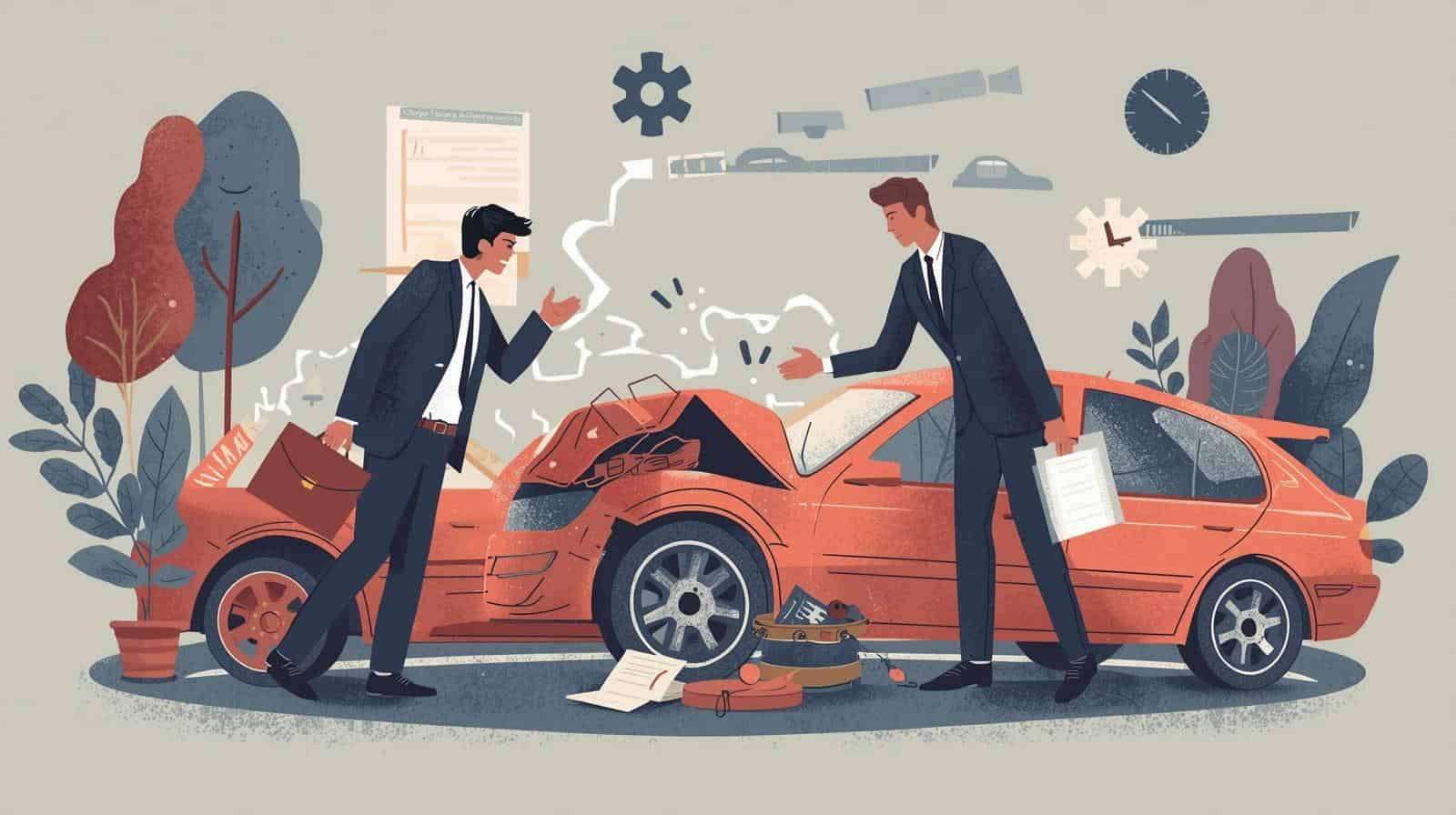
After a wreck, many people ask what does a car accident lawyer do, and the answer is more practical than most expect. A lawyer investigates the crash, protects your claim, values your losses, and deals with insurers that are looking for ways to pay less. That help can matter even more when injuries, multiple parties, or disputed facts make the case harder.
Investigating the Crash: Digging for the Truth
After a car accident, the immediate aftermath can be a blur. Your priority is usually medical care and basic recovery. This is where a lawyer steps in to figure out what happened and to preserve proof before it disappears.
Gathering Initial Details
The first step is getting a clear picture of the crash from your point of view. Your lawyer will ask about what happened before impact, what you saw and heard, and what changed right after the collision. That early timeline often guides the rest of the investigation.
Visiting the Accident Scene
If it is still useful, your lawyer or an investigator may visit the scene. Seeing the road layout, sight lines, traffic controls, lighting, and surface conditions can reveal details that photos alone miss. That fresh look can support or challenge the first version of events.
Obtaining the Police Report
The police report is a key starting document. It usually identifies the drivers, witnesses, vehicles, location, and any citations or officer observations. Your lawyer will review it closely, compare it with other evidence, and correct the record if something important is wrong.
Building Your Case: The Power of Evidence
Evidence is the backbone of any car accident claim. Without it, proving fault and proving the value of your losses becomes much harder. A lawyer knows what to collect, what to preserve, and what may need expert review.
Witness Statements
Eyewitnesses can provide useful third-party accounts of the crash. Your attorney may contact them quickly, because memories fade and people become harder to reach over time. A solid witness statement can support your version of events or expose weaknesses in the other side’s story.
Vehicle Damage Analysis
Damage patterns can tell an important story about impact, speed, and direction. Your lawyer may arrange inspections, photographs, or expert analysis to document crush damage, contact points, and repair estimates. That information can help reconstruct how the collision happened.
Black Box Data and Event Data Recorders
Many newer vehicles have Event Data Recorders, often called black boxes. Under the federal Driver Privacy Act, that data generally belongs to the vehicle owner or lessee, and access is usually limited unless there is consent, a court order, or another recognized exception. That is why a lawyer may move quickly to preserve the vehicle and pursue lawful access before important data is lost.
Medical Records and Bills
If you were hurt, medical records and bills become central evidence. Your lawyer will gather treatment notes, hospital records, therapy records, imaging results, prescriptions, and billing records. Together, those materials help prove both the existence of the injury and the cost of treating it.
Photos and Videos
Photos and videos from the scene can be powerful. Dashcam footage, surveillance footage, body camera footage, and cell phone images may show vehicle positions, weather, visibility, or immediate injuries. Your lawyer will try to collect and preserve that material before it is deleted or overwritten.

Pinpointing Responsibility: Who Is to Blame?
Fault is not always obvious after a crash. More than one person or company may have contributed, and insurers often try to shift blame quickly. A lawyer works through the facts and the law to identify every potentially responsible party.
Negligence in Driving
Most car accident claims rest on negligence law. In plain English, that means asking whether a driver failed to use reasonable care under the circumstances. Speeding, distraction, impairment, fatigue, unsafe lane changes, and running traffic signals are common examples.
Identifying Other Potentially Liable Parties
Sometimes the other driver is only part of the story. A defective vehicle part may point to a manufacturer, and a commercial driver may create exposure for an employer that was responsible for hiring, training, supervision, or maintenance.
The Legal Information Institute explains that sovereign immunity means a government usually cannot be sued without its consent, and state tort claims acts often define when that consent exists. In practice, that means claims against a road authority may be limited, may require special notice, and may fail if the agency still has immunity.
Understanding Comparative Fault
Fault rules vary by state. The Legal Information Institute explains that comparative negligence usually reduces damages by the claimant’s share of fault, while contributory negligence can bar recovery altogether. Alabama, Maryland, North Carolina, Virginia, and the District of Columbia still follow contributory negligence rules that can block recovery after even slight fault. In practice, a lawyer will identify which rule applies and work to minimize any blame assigned to you.
Quantifying Your Losses: What Is Your Case Worth?
The financial impact of a crash usually goes beyond the first hospital bill. A skilled lawyer looks at both present losses and future consequences so the claim reflects the full harm done. That work matters because an early settlement often closes the case for good.
Economic Damages: The Tangible Costs
The Legal Information Institute describes personal injury recovery as compensation for economic and non-economic harm caused by negligence. Economic damages are the measurable financial losses caused by the crash. That often includes medical expenses, lost wages, reduced earning capacity, property damage, and other out-of-pocket costs tied to treatment or recovery. A lawyer gathers the records needed to prove each category with real numbers.
Non-Economic Damages: The Intangible Impacts
Non-economic damages address harms that do not come with a receipt. The Legal Information Institute defines pain and suffering as physical discomfort and emotional distress that may be compensated as non-economic damages.
Pain, emotional distress, disfigurement, and loss of enjoyment of life often fall into this category, and proof usually comes from medical records, daily limitations, and credible testimony. That same source also explains that loss of consortium claims are usually limited to a spouse, widow, or widower, so a lawyer checks state law before adding that claim.
Calculating Future Needs
A good lawyer also looks forward. When injuries may affect future treatment, work, or daily function, counsel may use doctors, vocational experts, or life care planning evidence to estimate what those needs will cost. That helps prevent a settlement from ending the case before the real damage is known.

What Does a Car Accident Lawyer Do When Dealing with Insurance Companies?
Insurance companies are businesses, and their goal is to control what they pay on claims. They use adjusters, recorded interviews, policy language, and settlement tactics to limit exposure. A lawyer helps level that playing field and keeps the claim focused on evidence.
Initial Claims Filing and Communication
Your lawyer can handle much of the communication with the insurance company. That usually includes notice of the claim, document exchange, medical authorizations when appropriate, and responses that are carefully limited to what the claim actually requires. This reduces the chance of accidental statements that hurt your case.
Protecting You from Lowball Offers
A quick offer can be tempting, especially when bills are piling up. But an early number may ignore future care, missed work, or the real effect of the injury on daily life. Your attorney compares any offer to the evidence and explains whether it is fair.
Understanding Policy Limitations
Insurance coverage can shape the value of a case. A lawyer reviews the available policies, limits, exclusions, and possible additional sources of coverage, including uninsured or underinsured motorist benefits when they apply. That review helps set a realistic strategy from the start.
Handling Complex Policy Issues
Some claims involve overlapping policies, coverage disputes, or businesses that deny responsibility for a driver. Those issues can change who pays, how much coverage exists, and whether a lawsuit becomes necessary. A lawyer reads the policy language carefully and looks for every viable path to coverage.
Preventing You from Saying Too Much
Insurers often ask questions that seem routine but can be used to reduce or deny a claim. A casual comment about pain, work, travel, or daily activity can be taken out of context later. Having counsel handle communications lowers that risk and keeps the record cleaner.
Safeguarding Against Recorded Statements
Recorded statement issues depend on who is asking and what your own policy requires. The National Association of Insurance Commissioners model regulation distinguishes a first-party claimant, who seeks payment under a policy, from a third-party claimant, who seeks payment from someone else’s liability coverage. California Department of Insurance guidance also explains that your own insurer may ask for a written or recorded statement during its investigation. In practice, a lawyer reviews which insurer is asking before you answer questions on the record.
Legal Deadlines and the Court System: Staying on Track
The legal system has deadlines and procedural rules that can seriously affect a case. Missing one can damage leverage in settlement talks or end the claim altogether. A lawyer tracks those dates and makes sure the case moves in the right forum at the right time.
Statute of Limitations
The Legal Information Institute defines a statute of limitations as a law that bars claims after a set period of time passes after an injury. In practice, every state sets its own filing window, and the deadline can change based on the claim type or the defendant involved.
Government claims may trigger shorter notice rules long before the ordinary filing deadline. Freeman Law Firm also offers guidance on how car accident filing deadlines can affect a claim in practice. If the deadline is missed, a court may dismiss an otherwise strong case without reaching the facts.
Filing a Lawsuit When Necessary
If negotiations fail, filing suit may be the next step. Your lawyer drafts the complaint, identifies the right parties, serves the case properly, and begins formal litigation. Sometimes the act of filing is what forces serious settlement discussions.
Understanding the Discovery Process
Once a lawsuit is filed, each side can demand information through discovery. That may include written questions, document requests, depositions, and expert disclosures. Your lawyer manages those demands, protects privileged material, and uses discovery to strengthen your position.
Courtroom Representation
If the case reaches trial, your attorney presents witnesses, documents, expert testimony, and legal arguments to the judge or jury. Trial work also includes motions, objections, exhibit preparation, and jury instructions. Even when cases settle, strong trial preparation can improve the settlement value.

Advocating for Fair Settlements: The Ultimate Goal
Most car accident claims resolve through settlement rather than a verdict. Even so, settlement does not happen automatically. It usually takes a well-supported demand, steady pressure, and a willingness to litigate when the other side refuses to be reasonable.
The Negotiation Process
During negotiation, your lawyer uses the evidence on fault, injury, and damages to explain why the insurer should pay a specific amount. That presentation is stronger when the records are organized, the timeline is clear, and the long-term effect of the crash is documented. Good negotiation is less about bluffing and more about proof.
Building a Strong Case for Settlement
A strong settlement posture comes from preparation. When your lawyer can show who was at fault, why the injuries are real, and how the losses were calculated, the insurer has less room to discount the claim. That is why investigation and documentation matter long before trial.
Strategic Decision-Making
Your lawyer also helps with decision-making at each stage. That includes weighing risk, cost, timing, policy limits, and the chance that a jury could value the case differently than the insurer does. Good advice is not just about winning. It is about making informed choices.
Mediation and Arbitration
Some disputes move into mediation or arbitration. In mediation, a neutral person helps the parties try to reach a voluntary resolution. In arbitration, a neutral decision-maker may hear the evidence and issue a binding or nonbinding result, depending on the agreement and the governing rules.
Ensuring You Are Not Rushed
One of the most important jobs is slowing the case down when necessary. You should not be pushed into settling before treatment stabilizes or before the long-term effects of the injury are understood. A lawyer protects that timing so a rushed settlement does not leave major losses unpaid.
Frequently Asked Questions
When should I contact a car accident lawyer?
It is usually smart to contact a lawyer soon after the crash, especially if anyone was hurt or fault is disputed. Early legal help can preserve evidence, prevent damaging insurer communications, and keep important deadlines from being missed.
Do I need a lawyer for a minor car accident?
Not every minor crash requires a lawyer. But if the injuries worsen later, the insurer disputes fault, or the repair and medical issues become more complicated than expected, legal advice can still be valuable.
How does a car accident lawyer get paid?
Many car accident lawyers work on a contingency fee, which means the fee is usually tied to the result rather than paid upfront. The percentage, costs, and timing of payment can vary, so you should review the fee agreement carefully before signing.
How long does a car accident case take?
There is no single timeline for every case. Some claims resolve in a few months, while others take much longer if treatment is ongoing, liability is disputed, multiple parties are involved, or a lawsuit must be filed.
Will my car accident case go to court?
Many car accident claims settle without a trial, but some do move into litigation. A case is more likely to go to court when the insurer disputes fault, questions the injury, or refuses to offer a fair amount.
What should I bring to my first meeting with a lawyer?
Bring the police report if you have it, photos or video, insurance information, medical records or discharge papers, repair estimates, and any letters from insurers. A timeline of what happened and a list of your symptoms can also help your lawyer evaluate the case more quickly.
This article is for general educational purposes only and is not legal advice. A lawyer licensed in your state can evaluate the facts, deadlines, and insurance issues in your case.